
 by
by 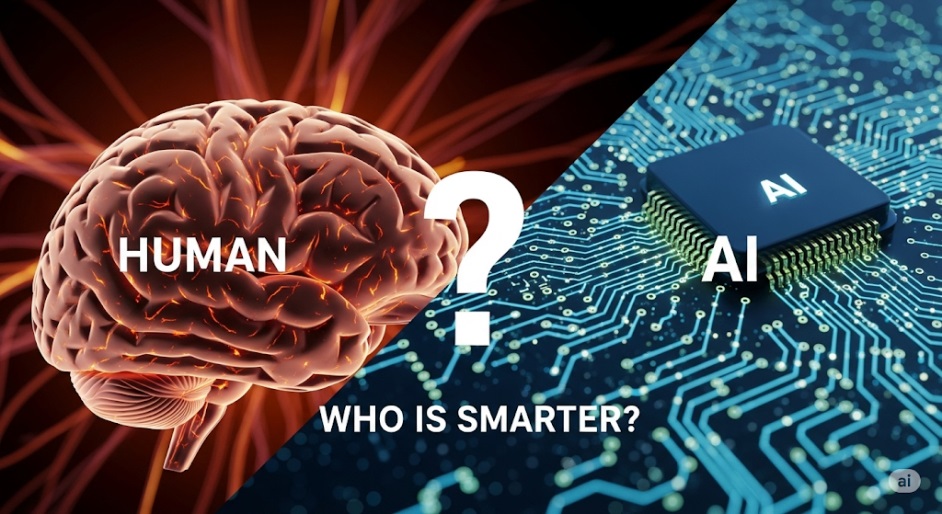
Whether humans or artificial intelligence (AI) are smarter is interesting and difficult to answer. AI is very good at solving problems quickly, handling large amounts of data, and finding patterns. But it’s not as simple as just comparing test results or how fast each one can think.
AI systems are very fast at handling large amounts of information. They can do complex math in just a few milliseconds, spot patterns quickly, and even win against world champions in games like chess and Go. Tools like language models, search engines, and self-driving car software show that machines can do better than humans at certain tasks, especially ones that involve a lot of data, repetition, or fast decisions. So, in specific areas like medical diagnosis, data analysis, and recognising images, AI can be considered “smarter” than humans.
But human intelligence is a lot wider and more flexible. People can be creative, understand emotions, think about right and wrong, and come up with new ideas—things that AI still isn’t very good at. We can question how things work, dream up new possibilities, and understand other people’s feelings. We also know how to handle social situations and make choices based on what’s right in different cultures and situations.
Another big difference is that humans are conscious—we’re aware of ourselves, have emotions, and make personal choices. AI doesn’t have feelings or awareness. It just follows the rules and data it was given.
In the end, AI is faster and better at certain jobs, especially ones that involve logic, patterns, or calculations. But human intelligence is more flexible, creative, and full of emotion. Instead of saying one is smarter than the other, it makes more sense to say they’re good at different things. The best future will probably come from humans and AI teaming up, working together to solve problems that neither could handle alone.
